


C Purlin vs Z Purlin: How Roll Forming Machines Produce Both and Why the Difference Matters for Your Project
If you have spent any time looking at structural steel framing for warehouses, factories, or agricultural buildings, you have almost certainly noticed the C-shaped and Z-shaped steel sections running along the roof and walls. These are C purlins and Z purlins, and while they look similar from a distance, they behave quite differently in a structural system. Getting them confused—or using one where the other would be better—is a mistake that shows up in the building's performance and the client's bill.
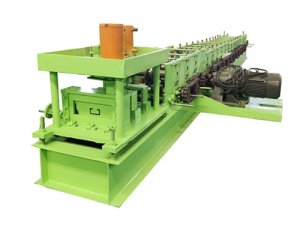
What Is a C Purlin
A C purlin is a cold-formed steel section with a C-shaped cross-section. It has a web (the vertical leg) and two flanges (the horizontal legs), one of which is often punched with slots to allow for connection and adjustment. C purlins are typically used as wall girts or as roof purlins in simple, single-span framing arrangements where the loads are light.
The C purlin roll forming process is straightforward: the coil strip enters the machine and passes through a series of rollers that gradually bend the flat strip into the C shape. The material springs back slightly after forming—a property called springback—and good machine manufacturers account for this by calibrating the roller geometry to produce the correct final dimensions. C purlin machines are among the most common roll forming machines supplied by manufacturers globally.
What Is a Z Purlin
A Z purlin is a Z-shaped section with a deeper web and flanges that are typically wider on one side. The geometry is deliberately asymmetric, and this asymmetry is intentional: it allows Z purlins to be overlapped and nested at continuous frame joints, creating a stronger, more continuous structural system than discrete C purlins.
When Z purlins are overlapped at the frame lines and run continuously over multiple spans, the structural efficiency is significantly higher than equivalent C purlins. Engineers who have done the calculations prefer Z purlins in multi-span configurations because the continuous system reduces the bending moments in the purlin and allows for lighter section sizes or wider spacing.
The Z purlin roll forming process is more complex than C purlin forming. The Z profile requires asymmetric rolling where the top and bottom flanges are formed at different angles and widths. Most Z purlin machines from established manufacturers use a different roller arrangement for each flange and include an anti-sag device to keep the strip flat as it enters the first forming station.
How Machines Handle Both Profiles
Some manufacturers supply dedicated single-purpose machines that make either C purlins or Z purlins. Others supply convertible machines that can switch between C and Z profiles by changing the roller cassette and adjusting the forming sequence. Convertible machines are appealing for factories that need to serve both market segments, but they typically run slightly slower than dedicated machines because the universal design involves compromises.
When evaluating a machine for C or Z purlin production, pay attention to the flange width range and the web height range. The ratio between flange width and web height affects how the purlin performs structurally. A machine that can produce a 300mm web height is not necessarily the right machine if your project requires a 200mm web with a 75mm flange—the forming geometry may not be optimized for that ratio.
Structural Behavior: When to Use Each
C purlins work well in the following situations: single-span roof and wall framing where continuity is not achievable, situations where the flanges need to be on the same side for cladding attachment, and lighter structural systems where the cost of continuous Z purlin systems is not justified by the loads.
Z purlins make sense in multi-span systems, especially where the building has multiple frames and the purlins can run continuously over three or more spans. They also work well where the structural engineer is optimizing the design for minimum steel weight, as the continuous system achieves the same load capacity with less material. In buildings with high wind or snow loads, the continuity advantage of Z purlins becomes even more significant.
Connection and Installation Differences
C purlins connect to rafters and columns using brackets, bolts, or welded plates. The slotted holes in the flanges allow some adjustment during installation, which is useful when tolerances in the structural steel frame are not perfect. C purlins can also be installed as singles or nested pairs for increased capacity.
Z purlins are typically overlapped at the frame line and connected with self-drilling screws through the overlapping flanges. The overlap length needs to be calculated based on the loads, but a typical detail uses a 150mm to 250mm overlap. Some manufacturers offer pre-punched holes at the correct spacing, which speeds up installation on site.
Sourcing the Right Machine from a Manufacturer
Before engaging a supplier, get clarity on your actual requirements. What is the maximum material thickness? What web heights and flange widths do your projects typically specify? Do you need to produce both C and Z on the same machine, or are you primarily focused on one profile? These questions determine the machine specification and the likely price range.
Ask the manufacturer for sample profiles cut from the machine you are considering. Measure them against the specifications you need. Look at the quality of the flanges—are they straight, or do they have a twist or bow? Are the ends cleanly sheared? Are the punch holes in the correct position? These details tell you whether the machine manufacturer has done their engineering properly.
The Honest Trade-off
There is no universally better purlin type. C and Z serve different structural functions and suit different building configurations. The engineering determines which one is right for your project, and the machine manufacturer you work with should be able to supply either profile on a machine that matches your production requirements. The factories and suppliers who have been building purlin equipment for a long time understand these nuances and can guide buyers toward the right specification rather than just the cheapest machine on the price list.
References
American Iron and Steel Institute. Commentary on the North American Specification for the Design of Cold-Formed Steel Structural Members. AISI S100-16, 2016.
British Standards Institution. BS EN 1993-1-3: Eurocode 3 — Design of Steel Structures: Cold-Formed Thin Gauge Members and Sheeting. BSI, 2006.
International Association of Cold Formed Steel Frame Engineers. Purlin and Girt Design Guide. IACSFG, 2nd Edition, 2020.
Steel Construction Institute. Steel Building Design: Worked Examples for Students. SCI Publication P327. Ascot: SCI, 2018.
Australian Standards. AS/NZS 4600:2018 Cold-Formed Steel Structures. Standards Australia, 2018.
This article is for construction professionals, engineers, and steel fabricators evaluating purlin systems and roll forming equipment options.


 首页
首页 产品
产品 联系
联系
