


If you have spent any time on a commercial construction site, you have seen C-shaped steel purlins holding up roof sheets and wall panels. These structural components are everywhere—warehouses, factories, agricultural buildings, and residential frames. What you might not have considered is how those exact purlins get made at scale, with consistent dimensions, at a cost that makes the whole project viable. The machine that handles that job is the C purlin roll forming machine, and if you are in the market for one, this guide is meant to cut through the noise.
What Is a C Purlin and Why Does It Matter?
A C purlin is a structural steel section shaped like the letter "C." It functions as a horizontal beam in roof and wall framing systems, distributing loads across the structure. Compared to hot-rolled I-beams, C purlins are lighter, easier to transport, and work well with cold-formed steel systems. In many low-rise commercial builds, they have effectively replaced timber in wall frames and roof trusses because they do not warp, split, or burn.
Contractors and engineers like them because they arrive at the site pre-cut to length, with pre-punched holes for screws and bolts. That means faster assembly, fewer labor hours, and less waste on site. The consistency of cold-formed C purlins depends almost entirely on the roll forming machine that produces them.
How a C Purlin Roll Forming Machine Works
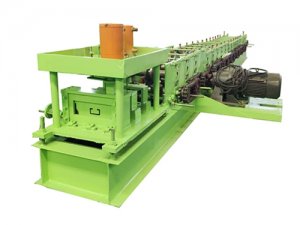
The machine feeds coiled steel strip through a series of forming rollers. Each roller pair bends the strip incrementally until it emerges at the other end as a finished C profile. The process is continuous—a coil weighing 5 to 15 tonnes can run through without stopping, producing purlins at speeds between 10 and 40 meters per minute depending on the machine's design and the material thickness.
Key components include the decoiler (uncoiler), the main roll former with its roller stands, a cutting system (hydraulic shear or flying saw), and a run-out table. A programmable logic controller (PLC) handles the length cutting and hole punching, so operators set the dimensions once and the machine runs.
Specs to Check Before You Buy
Not all C purlin machines are the same. Here is what matters when evaluating equipment from a manufacturer or supplier:
Material thickness and width range. Most machines handle strip between 1.5mm and 3.2mm thick, and widths from 80mm to 300mm or more. Know the range you need for your projects and confirm the machine covers it. Some machines are optimized for thinner, wider sheets; others are built for heavy structural sections.
Roller material and count. The rollers take enormous repetitive stress. Machines with chrome carbide or heat-treated rollers last significantly longer. Typical configurations have 12 to 18 roller stations. More stations mean a gentler forming curve, which reduces material stress and produces a cleaner profile.
Cutting precision. Hydraulic shear cutting is reliable and produces clean ends. Flying saw systems cut on the fly without stopping the strip, which dramatically improves throughput on long production runs. If you need tight length tolerances (under ±1mm), ask about the machine's PLC feedback system.
Motor power and speed. A 7.5kW main motor is standard for mid-range machines; heavier sections may require 11kW or 15kW. Speed is less important than consistency. A machine that runs smoothly at 20m/min for eight hours a day is worth more than one that claims 40m/min but vibrates badly at full speed.
The Real Cost of a C Purlin Machine
Prices from manufacturers and factories vary widely. A basic entry-level machine suitable for thin gauge material and small-scale production can cost as little as $8,000 to $15,000. Mid-range industrial models typically fall between $18,000 and $45,000. High-capacity machines with flying saws, auto-stacking, and remote diagnostics can exceed $70,000.
The purchase price is only part of the picture. Installation, electrical work, operator training, and tooling changes for different profiles add to the total investment. Also factor in ongoing costs: roller replacement every 2 to 4 years depending on volume, hydraulic oil changes, and wear on the decoiler's grip rollers.
Where Factories Deploy These Machines
Steel structure factories and prefabricated building manufacturers are the primary buyers of C purlin roll forming equipment. A typical production line includes a hydraulic decoiler feeding into the main former, then a PLC-controlled shear cutting purlins to order. Finished purlins are stacked and bundled for delivery to construction sites.
In emerging markets across Southeast Asia, Africa, and South America, locally manufactured purlins are replacing imported structural steel because they are cheaper to produce and ship. This has driven significant demand for reliable roll forming machines from established factories that can provide after-sales support and spare parts.
Maintenance Tips to Extend Machine Life
A well-maintained C purlin machine can run for 15 to 20 years with regular attention. Apply lubricant to roller bearings every shift. Check roller alignment monthly—misaligned rollers accelerate wear and produce twisted or bowed profiles. Keep the hydraulic cutting system clean; contaminated hydraulic oil is the most common cause of blade failure. Finally, store spare rollers in a dry environment to prevent surface corrosion.
Establishing a simple maintenance log pays off. Record production hours, roller changes, and any deviations in output quality. Over time, the log reveals patterns that let you replace parts before they fail and interrupt production.
Final Thoughts
A C purlin roll forming machine is a serious capital investment, but for factories producing structural steel components at scale, the return on investment is compelling. The key is knowing what you actually need—the thickness range, the production volume, the tolerances—and matching that to a machine with a proven track record. Talk to suppliers who have been in the business for more than a decade, ask for references from existing customers in your region, and whenever possible, visit a factory to see the machine running before committing.
The manufacturers and suppliers that have survived the long term are the ones that build machines people keep running.
References
American Iron and Steel Institute. Steel Framing Design Guide: Cold-Formed Steel Structural Framing. AISI S200-12.
British Standards Institution. BS EN 1993-1-3: Eurocode 3: Design of Steel Structures — Cold-Formed Thin Gauge Members and Sheeting. BSI, 2006.
International Association of Cold Formed Steel Frame Engineers. Technical Note: Purlins and Girts in Cold-Formed Steel Systems. IACSFG, 2018.
Material Handling Institute. Coil Processing and Roll Forming Equipment Standards. MHI Publications, 2020.
World Steel Association. Life Cycle Assessment of Cold-Formed Steel vs. Hot-Rolled Steel in Construction Applications. World Steel, 2021.
This article was published to assist buyers and industry professionals in understanding C purlin roll forming equipment. For inquiries about roll forming machines, contact a qualified manufacturer or supplier in your region.


 首页
首页 产品
产品 联系
联系
